In the tarot, the Fours offer a much-needed moment of rest, a pause in the action, a chance to breathe and process what’s been gained. But in the realm of science, especially thermodynamics, we learn that stability is often temporary. Systems can remain balanced for only so long before energy accumulates and tips them toward a new state. Much like water hovering at its boiling point as it slowly transforms into steam, the Fours represent a powerful threshold. Comforting, yes, but not a place to stay forever. At their core, the Fours represent not permanent stability, but a state of equilibrium charged with possibility.
The Numerology of Four: Form, Function, and Pause
In numerology, the number Four represents form and foundation. It is the square, the table with four legs, the stability of a house built on four corners. After the dynamic synthesis of the Three, Four brings order. It roots energy in something tangible. In both nature and cultural symbolism, Four shows up again and again: the four seasons, the four elements, the four directions.
This is the number that says: Stop. Breathe. Make it real.
However, even though it provides stability, the number Four can also become a holding pattern. A structure can be a sanctuary, but it can also become a box.
Thermodynamic Equilibrium: The Illusion of Rest
In thermodynamics, systems reach a state of equilibrium when competing forces are balanced. But balance does not mean inactivity. Molecules still vibrate; forces continue to act. What appears still is often just temporarily balanced.
This is the wisdom the Fours quietly hold. They are not dead zones. They are charged stillness. Just like in nature, something in the tarot Fours is always waiting, always gathering energy for what comes next.
We experience this kind of equilibrium in our own lives as well. It can look like a career that feels secure but uninspiring, a relationship that is comfortable yet emotionally stagnant, or a spiritual practice that no longer challenges us. Nothing is “wrong,” yet something feels incomplete. Like water at its boiling point, the pressure is subtle but unmistakable
The Tarot Fours as Threshold Moments
Each Four in the Minor Arcana expresses this state of charged equilibrium through its elemental lens, revealing where stability both supports and limits growth.
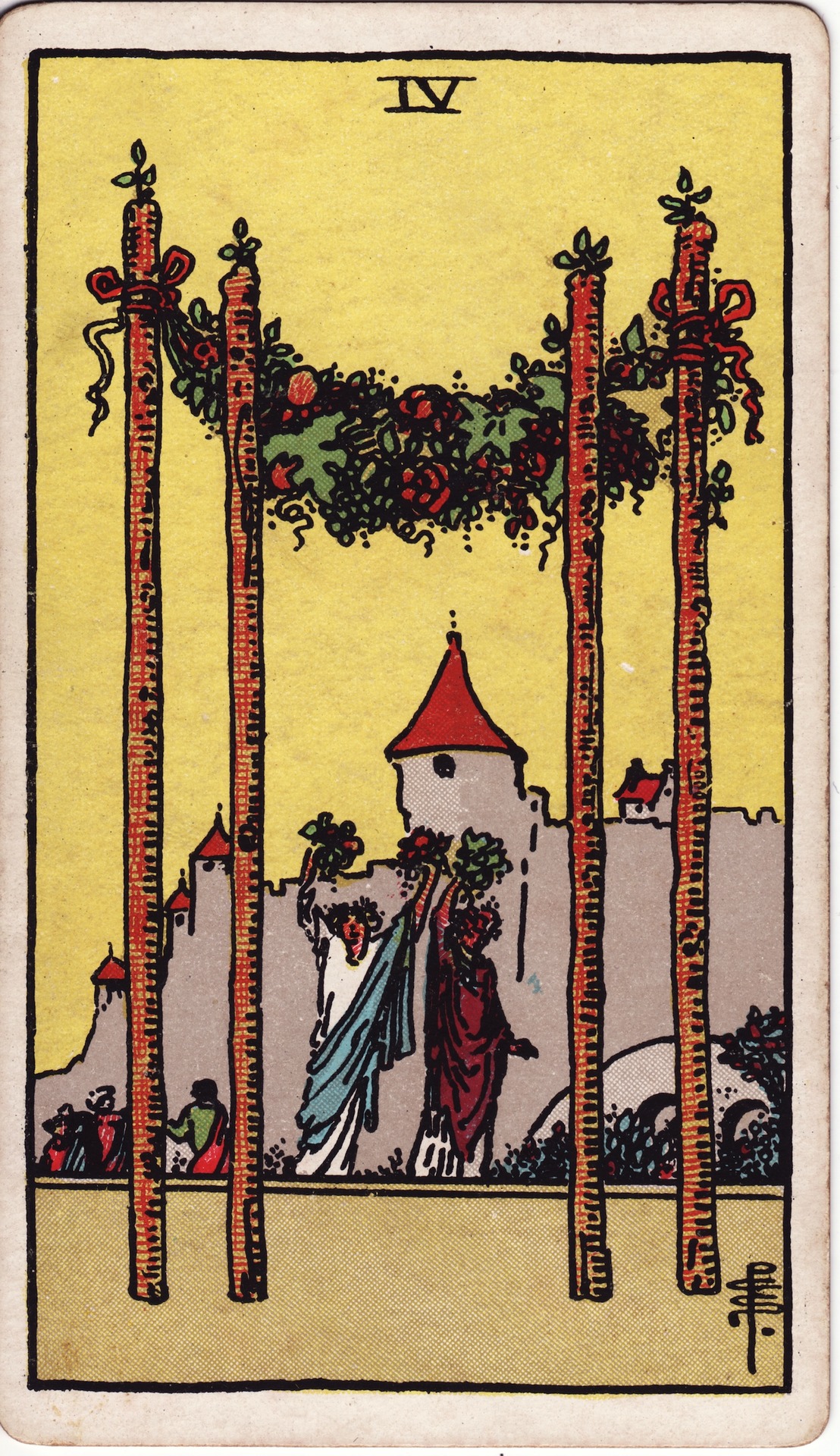
The Four of Wands captures a moment of joyful stability, when energy settles into form and something meaningful has been established. There is celebration here, not because the journey is complete, but because a foundation has taken hold. This card reflects a pause in motion, a gathering of warmth and recognition before the next movement begins. Like fire that burns steady after being carefully tended, the Four of Wands honors arrival without mistaking it for an ending. It reminds us that even in moments of harmony, energy is quietly preparing for what comes next.
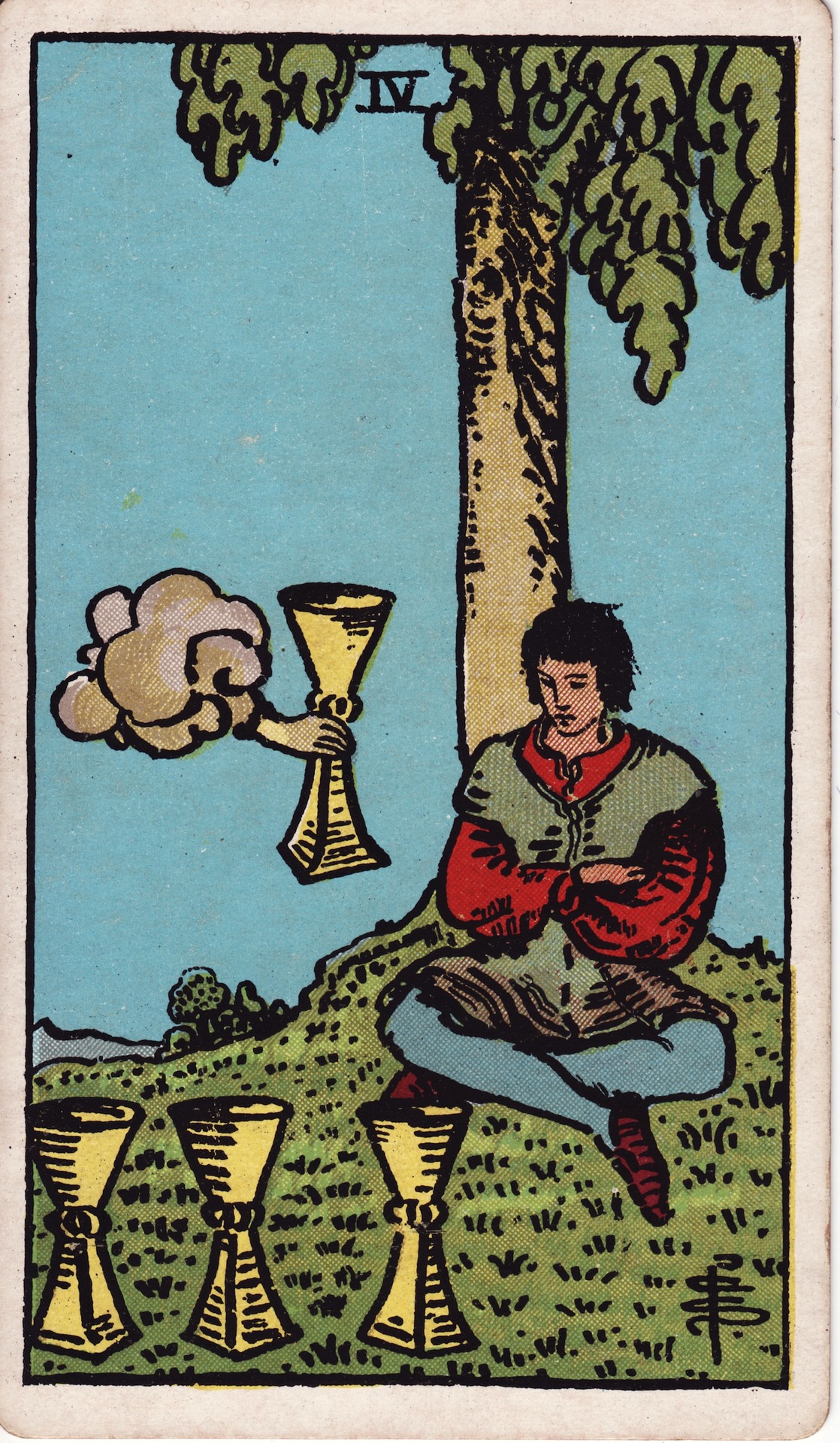
The Four of Cups reflects a moment when emotional energy turns inward and grows quiet. Feelings are not absent here, they are suspended. The heart rests in a familiar emotional climate, neither deeply engaged nor fully open to what is being offered. Like still water before it shifts course, this card marks a threshold where nothing appears to be happening, yet something subtle is stirring beneath the surface. The offered cup is not a demand for action, but an invitation that can only be received when curiosity returns and the system gently opens again.
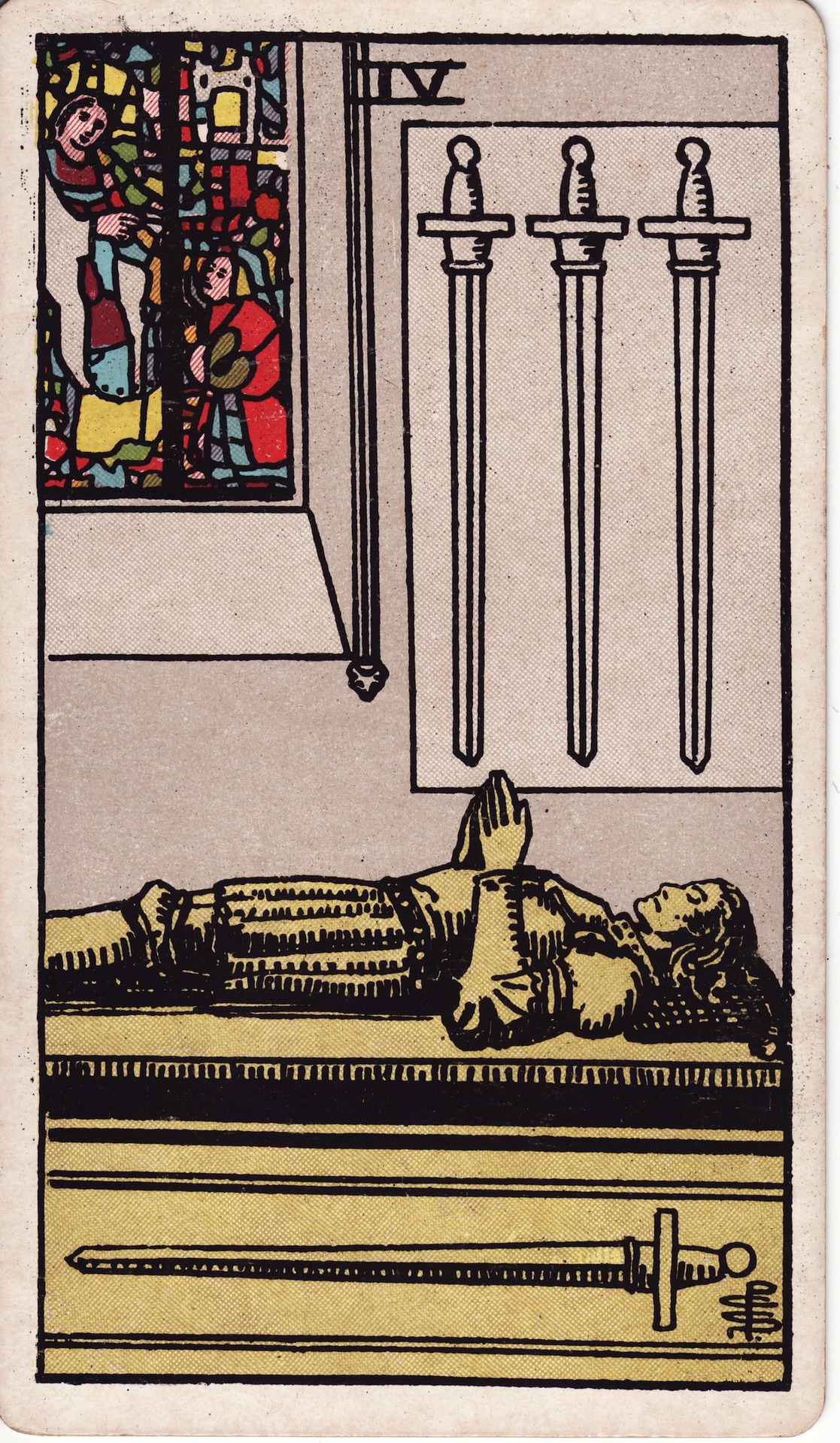
The Four of Swords represents intentional stillness. This is rest born of necessity, not avoidance, a cooling period that allows the mind to recover from overstimulation or conflict. It is a deliberate pause that restores balance before forward motion resumes. But even here, rest is temporary. This card prepares the mind for reactivation, reminding us that true recovery is measured not by how long we remain still, but by how well we return to motion.
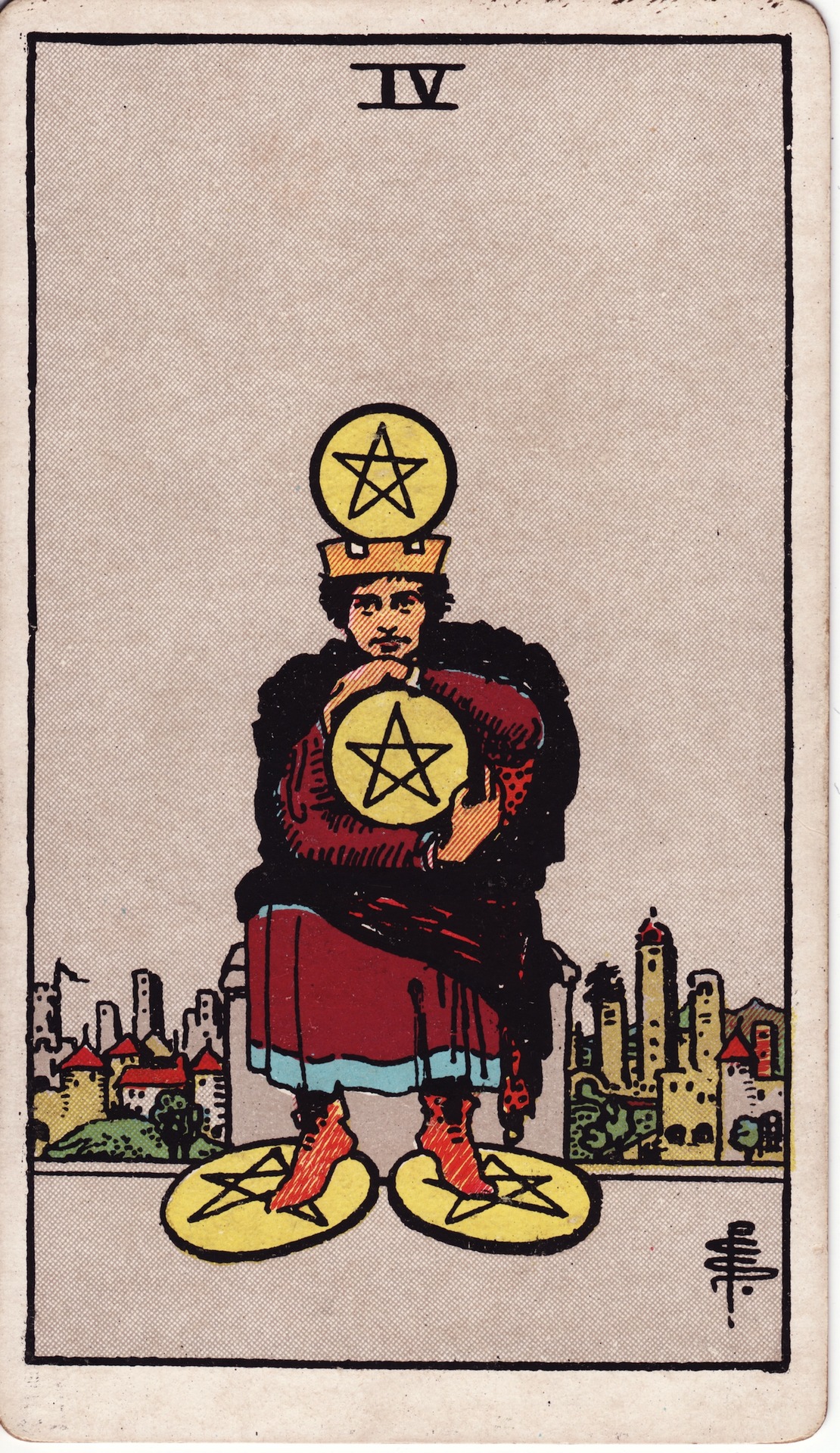
The Four of Pentacles shows stability taken to its extreme. Resources are protected, controlled, and held tightly in place. While this containment can create security, it can also restrict flow. Energy that does not circulate eventually stagnates. This card poses a crucial question: when does preservation become fear? Like a system resisting change, the Four of Pentacles warns that clinging too tightly to stability can fracture the very foundation we are trying to protect.
In all cases, the Four is not the end. It is the edge.
When Stillness Precedes Change
In science, we know that systems often resist change until pressure builds beyond their threshold. This is true of volcanoes, of human hearts, and of spiritual lives. You can only stay in the comfort zone for so long before something shifts. Either you evolve, or the system breaks.
The tarot Fours hold this truth gently. They offer us the gift of pause, but they also ask: What happens if you stay here forever? They are containers for growth, not cages.
Honoring the Threshold
Growth doesn’t come from resisting rest or rushing forward blindly. It comes from knowing the value of both stillness and motion. The Fours remind us that stability is sacred but life is in motion. And transformation doesn’t always come in chaos. Sometimes, it begins in the quietest moments of pressure, when the system is still, but not silent.
In tarot, as in thermodynamics, we find wisdom in the thresholds…those liminal spaces where change waits patiently beneath the surface.
If you’d like to continue exploring the wisdom of tarot, sign up for my Inner Light Insights monthly newsletter. Each month, you’ll receive fresh reflections, tarot spreads, and inspiration to help guide your own journey — plus a little extra light to keep your scales in balance.
 At first glance, tarot and science might seem like strange companions. But both explore how things begin, evolve, and take form. In earlier posts, we explored the Aces as pure potential and the Twos as polarity and choice. Now, the Threes mark a new phase where energy begins to move, multiply, and take shape. Not through opposition, but through creative synthesis.




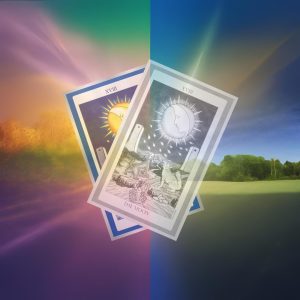 In physics, light is one of the great paradoxes: it behaves as both a wave and a particle. This strange truth, known as wave-particle duality, reminds us that what we observe depends on how we choose to look. This paradox isn’t just for scientists; it’s also a spiritual reminder.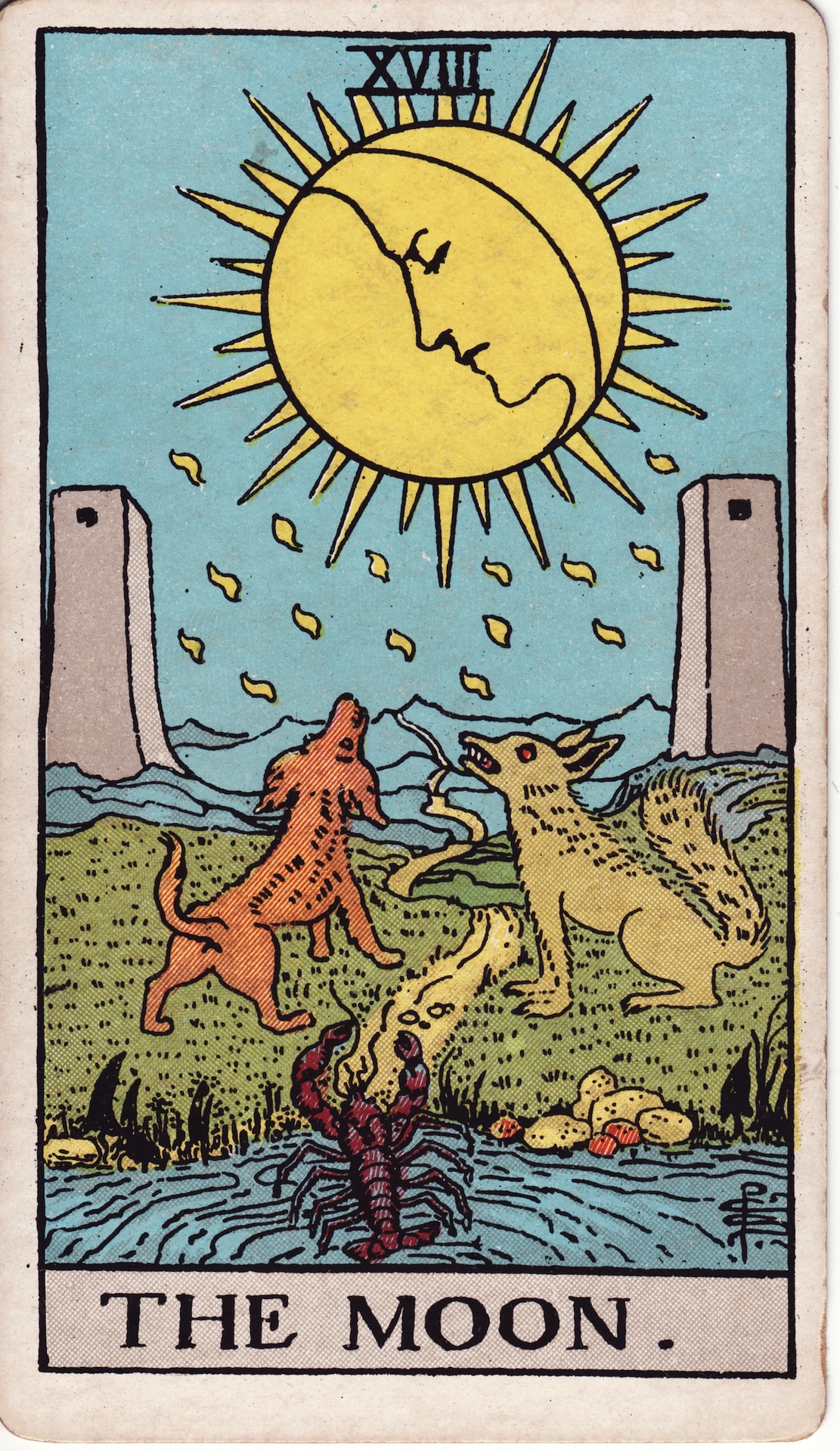

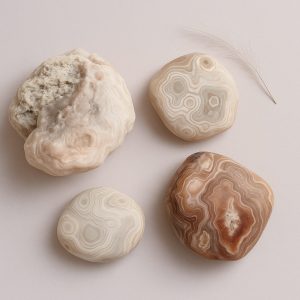 One of my quiet joys is rock tumbling. If you’ve never tried it, let me assure you - it’s perhaps the least instant gratification hobby you can imagine. You begin with a rough, unpolished stone. In my case, I started with a raw piece of Lace Agate...jagged, dusty, and seemingly unremarkable.