Ask someone to describe a great leader, and you'll likely hear words like visionary, charismatic, decisive, or powerful. We tend to admire the people at the front of the room: the ones making bold speeches, leading armies, or building empires.
Yet the leaders who shape our lives most profoundly are often the ones we hardly notice. They are the people who create stability in uncertain times. They keep their promises, establish healthy boundaries, and remain calm in the middle of chaos. They build homes, businesses, classrooms, and communities where others feel secure enough to learn, create, heal, and grow.
Their greatest achievement isn't gaining authority; it's creating an environment where others can reach their true potential. That is the ultimate lesson of Key IV of the Major Arcana: The Emperor.
The Emperor at a Glance
Card Number: Key IV
Ruling Astrological Sign: Aries
Element: Fire
Upright Keywords: Stability, structure, protection, reliable leadership, healthy boundaries
Reversed Keywords: Rigidity, control, tyranny, chaos, lack of discipline
Understanding The Emperor Tarot Card Symbolism
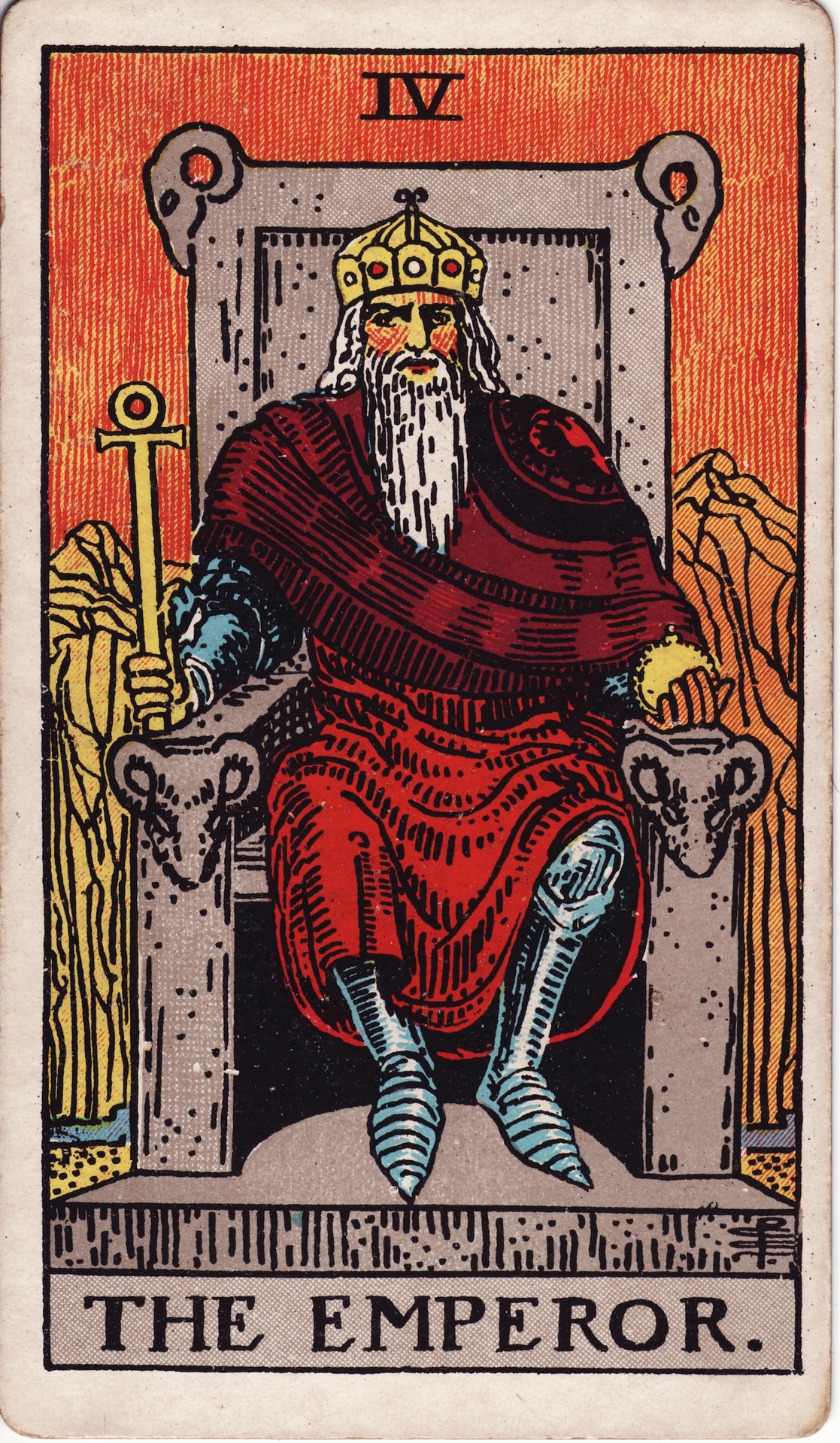 At first glance, The Emperor appears every bit the traditional ruler. He sits upon a massive stone throne, wearing a crown and royal robes, with a scepter in one hand and an orb in the other. His expression is calm, almost stern. Behind him, rugged mountains rise into the distance. Everything about the card conveys strength, authority, and permanence.
It is easy to conclude that this card is simply about raw power. But look again.
Notice what The Emperor isn't doing:
- He isn't standing on a battlefield.
- He isn't actively issuing commands or celebrating a victory.
- His sword remains sheathed.
He sits, steady and watchful, as though his very presence reassures those around him that everything is under control. This subtle difference changes the entire meaning of the card.
The Emperor's power is not an end in itself; it exists to create a safe container. His throne is carved from stone because stability matters. The barren mountains speak of endurance rather than comfort. Even the armor beneath his robes reminds us that while others are free to build their lives, someone remains prepared to protect what has been entrusted to them.
The Sacred Details: In his right hand, The Emperor holds an ankh, the ancient Egyptian symbol of life. His authority exists in service of life, not himself. The orb in his left hand symbolizes stewardship over the earthly realm. Together, these symbols remind us that true leadership is measured not by how much power we possess, but by how wisely we use it.
The Emperor Archetype in Daily Life
Fortunately, very few of us will ever rule a literal kingdom. Yet every one of us has been entrusted with something that depends on our care, whether it is a family, a business, a classroom, a circle of friends, or simply our own mental and physical health.
The Emperor reminds us that true authority is earned through faithful stewardship, not a title.
Think about the people who have made the greatest difference in your life. Chances are, they weren't the loudest voices in the room. They were the ones who showed up consistently. They remained the voice of reason when life became chaotic. They created a foundation where you felt supported enough to ask questions, take risks, make mistakes, and continue growing.
We embody The Emperor archetype whenever we become that steady presence for someone else:
- The Parent who establishes routines that help a child feel safe.
- The Teacher who creates a classroom where every student feels respected.
- The Manager who shields their team from corporate chaos so they can do their best work.
- The Partner who creates a relationship where both people feel secure enough to be vulnerable, pursue their dreams, and face life's challenges together.
The Power of Consistency
Popular stories love to celebrate flashes of triumph. We remember the explorer who discovers new lands, the warrior who wins the battle, or the visionary who changes the world. But once the cheering fades, a different kind of work begins.
Someone must rebuild what was broken. Someone must establish laws that protect the vulnerable. Someone must maintain the roads, repair the bridges, and resolve disputes before they become conflicts. These tasks rarely make history books, yet they are the work that allows a civilization to endure. This is where we find The Emperor.
The battle is over, but his responsibility has only begun. The kingdom does not need another conquest; it needs someone who will show up tomorrow, and the day after that.
There is nothing glamorous about consistency, and it rarely earns applause. Yet it is consistency that builds trust. And trust is the bedrock of any relationship, business, or community.
Conclusion: The True Measure of a Ruler
Ultimately, the measure of a leader is not the height of their throne, but the lives that flourish beneath it.
Whether your "kingdom" is a corporation, a household, or simply your own corner of the world, the quiet work of leadership remains the same: to create a space where others can thrive.
The Emperor remains seated upon his stone throne as a timeless reminder: the greatest leaders are not remembered for the power they wielded, but for the lives they made stronger simply by being there.