Inner Light Tarot
Inner Light Tarot
  • ABOUT
    • Meet Lisa
    • Why Inner Light Tarot
    • Client Testimonials
    • Inner Light Insights
  • GETTING STARTED
    • Reading FAQs
    • Client Agreement
    • Code of Ethics
  • BOOK A READING
  • TAROT BASICS
    • What is Tarot?
    • Frequently Asked Questions
    • Asking the Right Question
    • Love Reading Tips
    • Career Reading Tips
    • Personal Growth Readings
  • TAROT INSIGHTS
Inner Light Tarot
  • ABOUT
    • Meet Lisa
    • Why Inner Light Tarot
    • Client Testimonials
    • Inner Light Insights
  • GETTING STARTED
    • Reading FAQs
    • Client Agreement
    • Code of Ethics
  • BOOK A READING
  • TAROT BASICS
    • What is Tarot?
    • Frequently Asked Questions
    • Asking the Right Question
    • Love Reading Tips
    • Career Reading Tips
    • Personal Growth Readings
  • TAROT INSIGHTS
Home > Blog

Understanding the Suit of Wands: The Fire of Passion and Possibility

June 9, 2026 by Lisa

Fire is the force of action. It inspires. It energizes. It transforms.

The Suit of Wands carries this same energy. Associated with the element of Fire, Wands represent passion, creativity, ambition, and the desire to grow. In traditional tarot symbolism, fire is considered an active, masculine element that seeks expression through movement, initiative, and action.

Wands often appear when something inside us is stirring...a new idea, a dream, a calling, or a longing for something more.

But Wands are about more than inspiration and action. They tell the story of possibility itself.

What does the Suit of Wands represent in Tarot?

The Suit of Wands governs the world of inspiration, energy, and action. Wands represent the initial spark of passion, ambition, and the personal willpower required to start the journey. It is the realm of creativity, spiritual purpose, career drive, and the raw enthusiasm that pushes us out of our comfort zones.

Core Element: Fire

Key Themes: Passion, creative vision, personal ambition, spiritual growth, movement, and competition.

Upright Keywords: Inspiration, growth, high energy, bold action, potential, enterprise.

Reversed Keywords: Burnout, lack of direction, delays, misdirected energy, conflict, inner creative blocks.

The Energy of Becoming: The Ace of Wands

Ace of Wands from tarot minor arcanaThe classic Rider-Waite-Smith version of the Ace of Wands depicts a hand emerging from a cloud, holding a living branch sprouting fresh leaves. In the distance, we see a flowing river, fertile land, and mountains rising on the horizon.

Notice that the wand is not a finished, polished object. It is still growing.

This single image captures the core meaning of the Suit of Wands:

  • The Growing Branch: Our passions are rarely fully formed when they first appear. They begin as small interests, ambitions, and curiosities that ask for our attention.
  • The Distant Mountains: Every meaningful pursuit will encounter challenges and obstacles.
  • The Fertile Landscape & River: You have the potential for massive growth, movement, and momentum.

Together, these symbols tell a larger story: passion alone is not enough. Growth requires active participation.

While the Suit of Wands is famous for creativity, its energy extends far beyond the initial spark. It is the force that motivates you to begin, the courage that helps you continue, and the determination that carries you through to the end.

The Storyline of the Wands Tarot Cards

Unlike many tarot symbols that capture an isolated moment, the Suit of Wands tells a continuous, unfolding story across the cards.

  1. Inspiration: It begins with a single spark of an idea (The Ace).
  2. Expansion: It grows through planning, opportunity, and initial choices.
  3. Resistance: It encounters real-world competition, conflict, and obstacles.
  4. Mastery: It ultimately arrives at deep responsibility, boundaries, and success.

To bring possibility into the world requires action, perseverance, and commitment. Passion gets you started, but dedication finishes the job.

How Wands Show Up in Everyday Life

Wands are much easier to recognize in your daily life than you might realize. They active whenever purpose, ambition, or personal growth become your driving forces.

You are likely experiencing strong Wand energy when you are:

  • Chasing New Ideas: Feeling incredibly excited about a new project and unable to stop thinking about the possibilities.
  • Building a Business: Pouring your time, heart, and daily energy into launching a new venture.
  • Standing Your Ground: Realizing you care enough about a boundary or belief to actively defend and advocate for it.
  • Striving for Growth: Actively competing for a promotion, a leadership role, or a new career opportunity.
  • Overcoming Obstacles: Navigating setbacks and challenges but refusing to quit.

Wands are not always certain of the final outcome, but they remain fiercely committed to the journey.

When Fire Burns Too Hot

Fire gives vital warmth and light, but it can also burn out of control. The shadow side of the Suit of Wands appears when your internal fire lacks direction or boundaries.

This reverse or shadow energy typically manifests as:

  • Impatience and Rushing: Becoming so excited about an opportunity that you leap ahead without a clear plan.
  • Restlessness: Feeling trapped or bored in a job, relationship, or routine that no longer challenges your spirit.
  • Burnout and Fatigue: Juggling too many projects at once, convinced you can do it all, only to exhaust your physical and mental energy.

The core lesson of the Wands is rarely to extinguish your fire. Instead, the goal is to channel your energy wisely so it can sustain you for the long journey ahead.

Embracing the Fire of Wands

The Suit of Wands reminds us that every accomplishment, relationship, creative work, and life change begins as a spark of possibility.

  • Before there is a plan, there is a vision.
  • Before there is certainty, there is curiosity.
  • Before there is success, there is the courage to begin.

This powerful energy is a constant reminder that real growth is rarely comfortable. It asks us to step completely beyond what is familiar, trust our deepest instincts, and actively participate in shaping our own future.

Ultimately, the Wands ask us not what is safe, but what is possible.

Frequently Asked Questions

What do Wands represent in a tarot reading?

In a tarot reading, Wands represent action, ambition, identity, and personal growth. They mirror your inner drive, career pursuits, creative projects, and how you assert yourself in the world. When Wands appear, they usually indicate that momentum is building and initiative is required.

What element is the Suit of Wands associated with?

The Suit of Wands is associated with the element of Fire. This element represents energy, passion, creativity, willpower, and the spark of life. Like fire, wand energy is dynamic, quick-moving, and transformative, but it requires careful management so it doesn’t burn itself out.

What does it mean if a reading is mostly Wands?

A reading dominated by Wands means your current situation requires immediate action, passion, and high energy. It indicates that you are currently focused on career, creative projects, or personal ambition. However, it can also warn that you are running on pure adrenaline and need to watch out for conflict or burnout.

What is the shadow side of the Suit of Wands?

The shadow side of the Suit of Wands represents fire out of control. Because Wands rule passion, impulse, and ego, their shadow energy manifests as burnout, impatience, reckless behavior, and unnecessary conflict. When the fire element isn't channeled constructively, it quickly turns destructive.

What astrological signs match the Suit of Wands?

The Suit of Wands corresponds to the three astrological fire signs: Aries, Leo, and Sagittarius.

  • Aries (Cardinal Fire) represents initiative, courage, and the drive to begin. These qualities are expressed through the Two, Three, and Four of Wands as new possibilities take shape.
  • Leo (Fixed Fire) represents confidence, self-expression, and the desire to stand out. These themes appear in the Five, Six, and Seven of Wands through competition, recognition, and the challenge of defending one's position.
  • Sagittarius (Mutable Fire) represents expansion, exploration, and the search for meaning. The Eight, Nine, and Ten of Wands reflect this energy through movement, perseverance, and the pursuit of a goal despite increasing demands.

What is the difference between Sword stress and Wand stress in a reading?

Sword stress is mental and anxiety-driven, while Wand stress is physical and behavioral. Sword stress is the classic "up at 2 AM overthinking" energy (like the Nine of Swords). Wand stress is the raw exhaustion of over-commitment, physical burnout, and trying to force momentum when your body desperately needs rest.

What time frame or speed do Wands indicate?

Wands represent rapid movement and short time frames. Because fire spreads quickly, drawing a majority of wands suggests things are happening fast, often within days or weeks. If you are looking at seasons, Wands traditionally represent Spring (as life bursts forth) or Summer (when the sun's fire is at its peak).

What playing card suit matches the Suit of Wands?

The Suit of Wands corresponds to the suit of Clubs in a standard deck of playing cards. Both suits share a historical connection to wooden staves, batons, or clubs, and both represent action, enterprise, and the driving force behind new ventures.

What does a Court Card from the Suit of Wands mean?

Wands Court Cards (Page, Knight, Queen, King) represent people in your life—or aspects of yourself—who are passionate, energetic, and action-oriented. These individuals are typically natural leaders, entrepreneurs, or creatives who lead with their gut instincts and possess a magnetic, charismatic personality.

How do you balance an excess of Wands energy?

To balance an excess of Wands energy, you must practice grounding, slow down your decision-making, and focus on finishing current projects before starting new ones. Because Wands represent fast-burning fire, balancing this energy requires incorporating the stability of Earth or the emotional reflection of Water to prevent total burnout.

Continue Exploring the Tarot Suits

Every tarot suit highlights a different aspect of life. Explore the other suits to discover how emotion, thought, and practical experience work together to tell the story of a reading.

  • Understanding the Four Tarot Suits: A Beginner’s Guide to Wands, Cups, Swords, and Pentacles
  • Understanding the Suit of Cups: The Language of the Heart
  • Understanding the Suit of Swords: The Power of the Mind
  • Understanding the Suit of Pentacles: The Work of Building a Legacy

Filed Under: Blog, Tarot 101 Tagged With: Featured

Understanding the Four Tarot Suits: A Beginner’s Guide to Wands, Cups, Swords, and Pentacles

June 8, 2026 by Lisa

What do the four Tarot suits mean?

The Minor Arcana is divided into four distinct suits, each representing an essential element of the human experience. Together, they map out the daily challenges, growth cycles, and lessons we encounter on our life journey.

Suit of Wands (Fire): Rules action, passion, spirituality, and creative ambition. It answers the question: What drives you?

Suit of Cups (Water): Rules emotions, relationships, intuition, and love. It answers the question: What do you feel?

Suit of Swords (Air): Rules the mind, intellect, truth, and psychological battles. It answers the question: What do you think?

Suit of Pentacles (Earth): Rules the material world, career, health, and foundations. It answers the question: What are you building?

One of the biggest challenges for new tarot readers is feeling like they need to memorize dozens of card meanings. Fortunately, tarot is much easier to learn when you understand the structure of the deck.

The Minor Arcana consists of 56 cards divided into four distinct suits: Wands, Cups, Swords, and Pentacles. Think of each suit as a different lens through which we experience life. Once you map these suits to everyday life, you will start recognizing patterns across the deck naturally. No flashcards required!

What Are the Four Tarot Suits?

Ace of Wands from tarot minor arcana
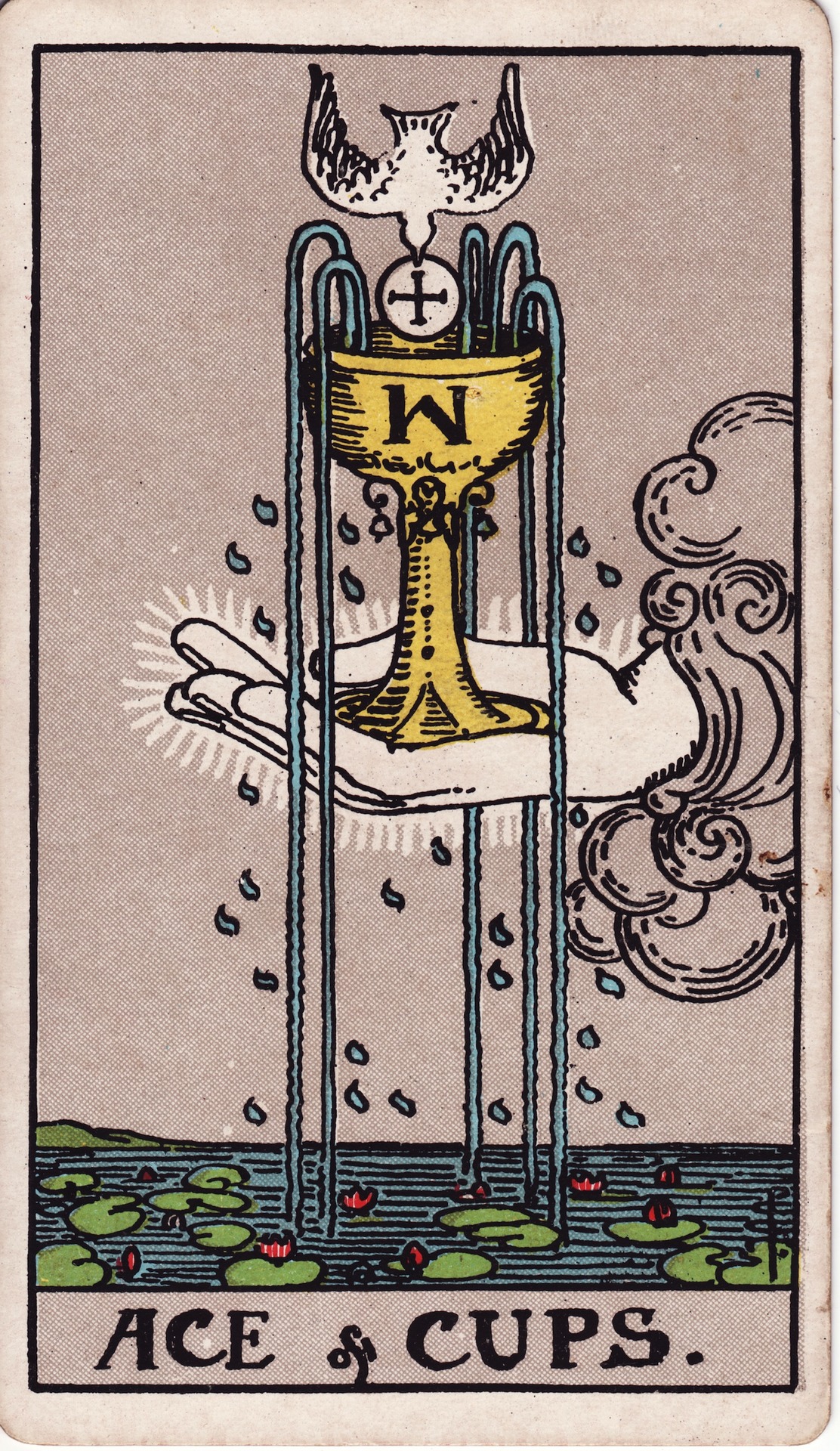
Ace of Cups from tarot minor arcana
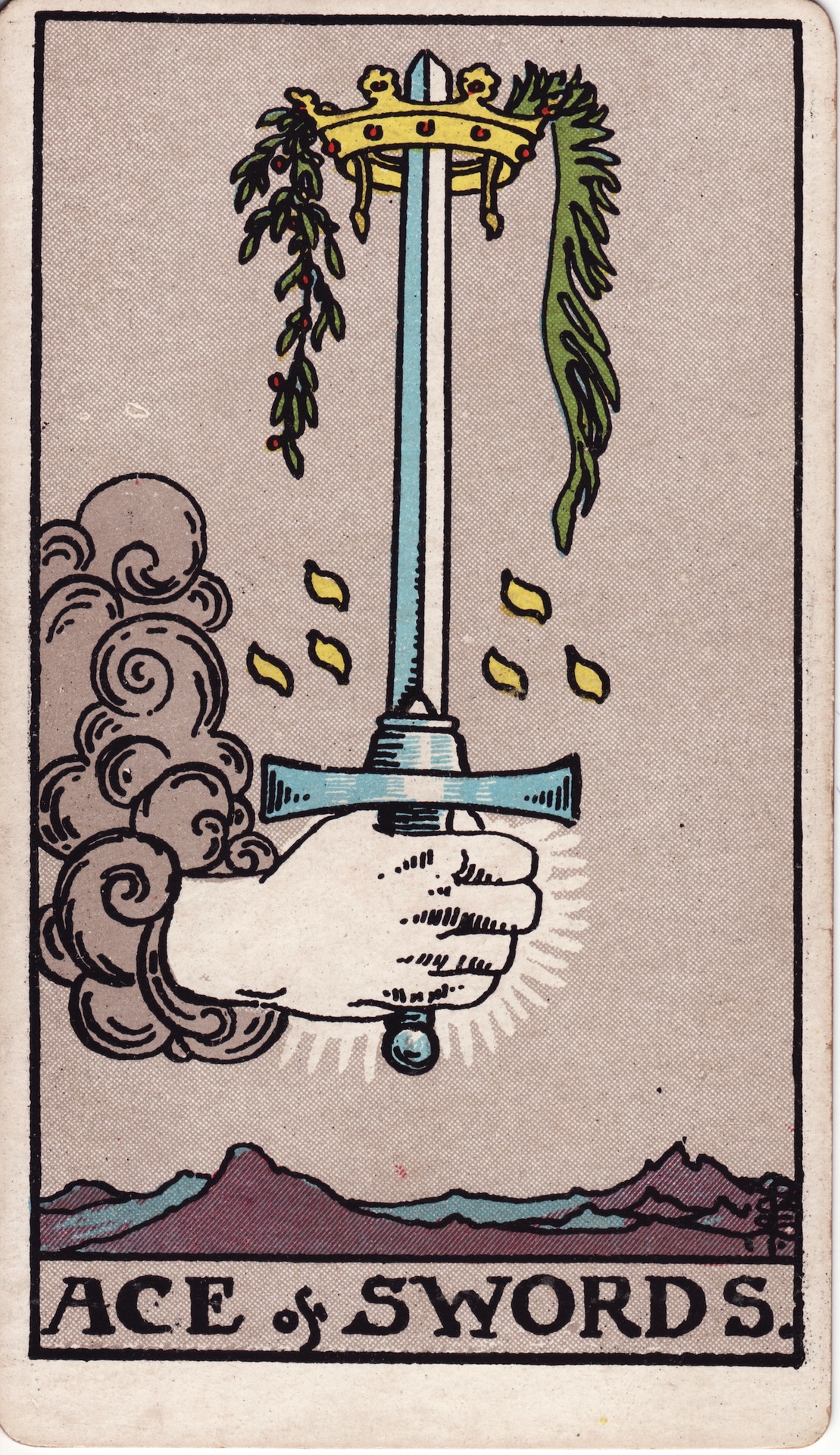
Ace of Swords from tarot minor arcana
Ace of Pentacles from tarot minor arcana

The Suit of Wands is associated with the element of Fire and often relates to passion, inspiration, and taking action. In many esoteric traditions, Fire is considered an active or masculine element. Some decks may refer to this suit as Rods, Staves, or Batons.

The Suit of Cups is associated with the element of Water and explores emotions, relationships, and intuition. Water is traditionally considered a receptive or feminine element. Some decks may call this suit Chalices, Vessels, or Cauldrons.

The Suit of Swords is associated with the element of Air and focuses on thoughts, communication, and perspective. Like Fire, Air is considered an active or masculine element. You might also see Swords referred to as Blades, Daggers, or Feathers.

The Suit of Pentacles is associated with the element of Earth and relates to work, finances, security, and the physical world. Earth is traditionally considered a receptive or feminine element. Depending on the deck, Pentacles may also appear as Coins, Disks, or Stones.

Together, these four suits form the foundation of the Minor Arcana and provide a framework for understanding the cards as a whole.

Is There a Certain Order to the Suits?

Many tarot traditions present the suits in the order of Wands, Cups, Swords, and Pentacles.

One way to understand this sequence is through their connection to the cardinal signs of the zodiac and the changing seasons. Wands correspond to Aries and the beginning of spring, Cups to Cancer and the fullness of summer, Swords to Libra and the transition into autumn, and Pentacles to Capricorn and the stillness of winter.

You may also encounter another perspective that sees the suits as the journey from inspiration to manifestation. First comes the spark of a creative idea (Wands). Then, you fall in love with the concept (Cups). Next, you analyze the logistics and solve problems (Swords). Finally, you put in the physical labor to build a tangible result (Pentacles).

Regardless of which framework you prefer, the order of the suits provides a useful way to understand how energy moves and develops within a reading.

How to Use Suits for Instant Insights

When you pull a card, don't look at the tiny details first. Zoom out. Look at the suit dominant in your spread to immediately identify where the energy of the situation sits.

If a client asks about a career change and the spread is flooded with Cups, the real issue isn't money, it's emotional fulfillment. If they ask about a relationship and see mostly Pentacles, the focus is likely on stability, shared resources, or building a home together. The suit gives you your baseline context before you even examine a card's number or specific imagery.

The Foundation of the Minor Arcana

The four suits form the foundation of the Minor Arcana and provide a roadmap for understanding the cards. Rather than memorizing dozens of individual meanings, begin by recognizing the themes associated with each suit. Over time, you'll start to see how the cards work together to tell a larger story about action, emotion, thought, and the physical world. As your understanding grows, the suits become less like categories and more like a language that helps you interpret the deeper message of a reading.

Continue With the Series

Now that you have a basic understanding of the four suits, let's take a closer look at each one individually.

  • Understanding the Suit of Wands: The Fire of Passion and Possibility
  • Understanding the Suit of Cups: The Language of the Heart
  • Understanding the Suit of Swords: The Power of the Mind
  • Understanding the Suit of Pentacles: The Work of Building a Legacy

Frequently Asked Questions

What do the four tarot suits represent?

The four suits represent different aspects of human experience. Wands relate to passion and action, Cups to emotions and relationships, Swords to thoughts and communication, and Pentacles to work, resources, and the physical world.

Are the Tarot Suits Masculine or Feminine?

In traditional Western esoteric systems, the tarot suits inherit the qualities of their corresponding elements.

Wands (Fire) and Swords (Air) are considered active or masculine suits. They tend to express energy outwardly through action, initiative, communication, and assertion.

Cups (Water) and Pentacles (Earth) are considered receptive or feminine suits. They process experience inwardly through emotion, intuition, reflection, nurturing, stability, and cultivation.

These terms do not refer to gender, biological sex, or personality traits. Instead, they describe complementary energetic principles that exist within everyone. Most tarot readings contain a blend of both active and receptive energies working together.

What is the easiest way to learn tarot suits?

Start by learning the basic themes associated with each suit and their corresponding elements. Over time, you'll begin to recognize patterns and relationships between the cards.

Which tarot suit is most important?

No suit is more important than another. Each represents a different aspect of life, and all four work together to tell the story unfolding within a reading.

What does it mean if a suit doesn't match the question being asked?

This is where the magic happens! If someone asks a purely financial question (expecting Pentacles) but the spread is full of Cups, the cards are telling you the root issue isn't money - it's emotional. They might be seeking validation, fear abandonment, or need a career that offers fulfillment rather than just a paycheck. Pay close attention to these "mismatches," because they reveal what’s truly going on beneath the surface.

Why does my deck have different names or elements for these suits?

While the Rider-Waite-Smith (RWS) system is the blueprint for most modern decks, tarot is a living art form. Authors often rename suits to fit a specific aesthetic (like using "Cauldrons" for a witchy deck or "Arrows" for a nature deck). Always check your deck's companion guidebook to see the specific rules its creator intended!

Are tarot suits similar to playing card suits?

Yes. The tarot suits are related to traditional playing card suits. Wands correspond roughly to Clubs, Cups to Hearts, Swords to Spades, and Pentacles to Diamonds. Tarot builds upon this familiar structure with additional symbolism and the 22 cards of the Major Arcana, which explore the larger themes, lessons, and turning points of the human journey.

Filed Under: Blog, Tarot 101 Tagged With: Featured

Capricorn and the Devil: Control, Ambition, and Spiritual Freedom

May 25, 2026 by Lisa

As the winter solstice arrives, the earth shifts into its darkest season. The days grow shorter, the air turns colder, and nature begins to slow down and conserve its energy. It is within this stark and demanding landscape that Capricorn begins its season, spanning roughly December 22nd through January 19th.

Capricorn is deeply connected to the symbolism of winter. This is not the lush growth of spring or the outward expansion of summer. Capricorn emerges during a time of endurance, patience, and quiet resilience. The mountain goat does not thrive because conditions are easy. It survives because it learns how to navigate difficult terrain with discipline, focus, and steady determination.

It is perhaps no surprise, then, that Capricorn is associated with The Devil in tarot. At first glance, the pairing can seem harsh, especially because the Devil card is so often misunderstood. But this connection is not about evil or punishment. It is about attachment, control, and the tension between mastery and bondage.

The Nature of Capricorn

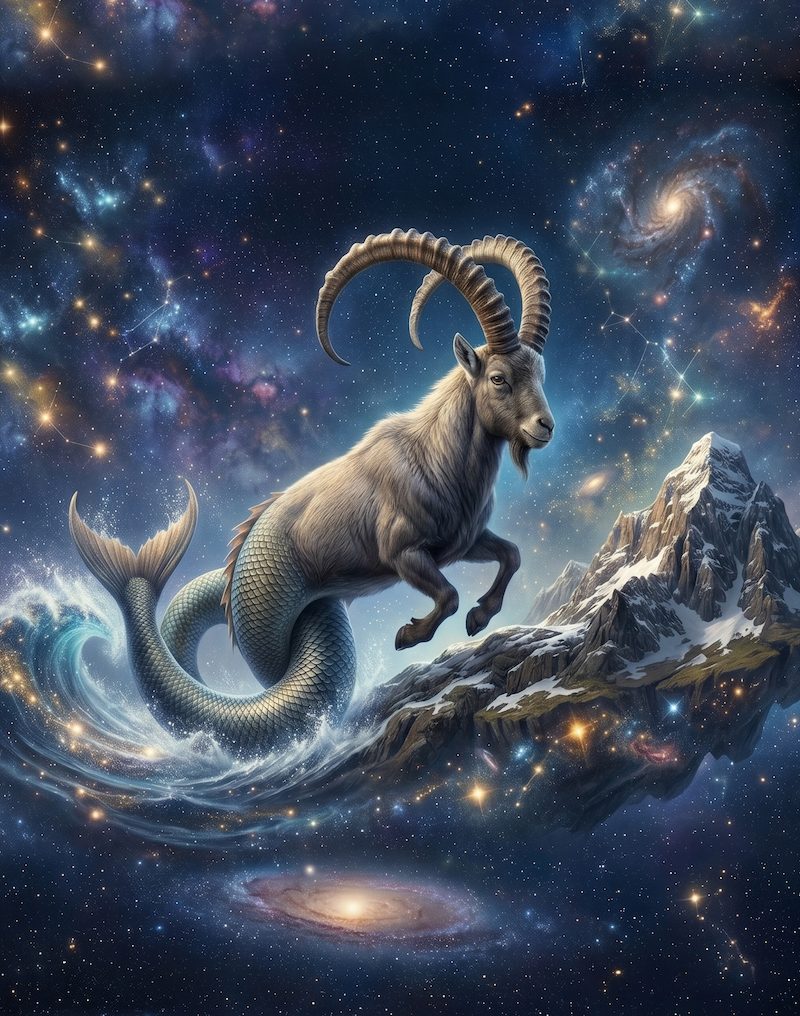
A majestic Capricorn sea-goat with large curved horns and a shimmering fishtail, leaping from a rugged, snow-capped mountain peak into a swirling cosmic night sky filled with galaxies and nebulae. Capricorn is often associated with ambition, discipline, responsibility, and achievement, but beneath those surface traits is a much deeper emotional and spiritual story. Ruled by Saturn, Capricorn understands limitation, pressure, endurance, and the realities of the material world.

Capricorn energy is strongly connected to building something lasting. It values structure, competence, wisdom earned through experience, and the ability to endure difficult seasons without giving up. At its best, Capricorn teaches patience, resilience, integrity, and long-term vision. This is the archetype of the mountain climber who is willing to move steadily toward mastery rather than chasing quick rewards.

But Capricorn’s strengths can also become its struggles.

Because Capricorn is closely tied to responsibility and self-protection, it can develop a powerful need for control. Emotions may be suppressed in favor of productivity, while self-worth becomes tied to achievement or the ability to “hold everything together.” Over time, this pressure can create rigidity, emotional isolation, or the belief that rest and vulnerability must be earned.

The challenge is not simply learning how to succeed in the material world; it is learning how to do so without losing connection to the soul.

The Symbolism of The Devil

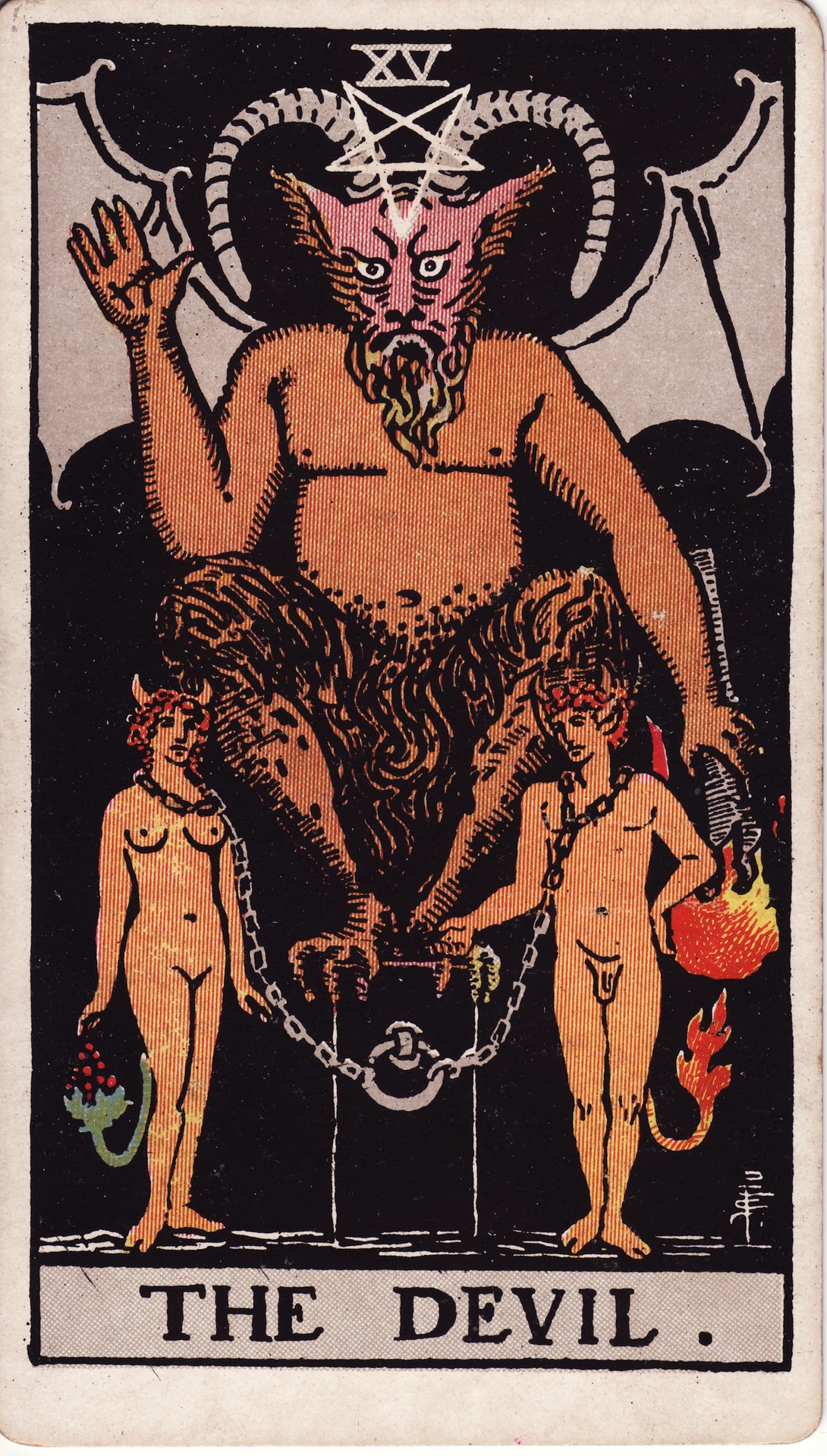
The Devil, a major arcana tarot card
Click to view image

The Devil card is one of the most misunderstood cards in tarot. Despite its frightening imagery, it is rarely about literal evil. More often, the Devil represents attachment, fear, control, temptation, and the ways we become trapped by our own unconscious patterns.

In the traditional Rider-Waite-Smith image, two figures stand chained beneath the Devil. But an important detail is often overlooked: the chains are loose. They could remove them. This suggests that the bondage shown in the card is not entirely external. The prison is often psychological, emotional, or spiritual.

The Devil frequently appears when something has gained too much power over us — fear, unhealthy relationships, addiction, shame, status, or the need for control. It can also reflect survival strategies that once protected us but now keep us stuck.

Like Capricorn, the Devil card explores the tension between discipline and bondage, asking what happens when ambition, control, or achievement begin to consume identity itself.

The Strengths Within These Archetypes

Like every tarot and astrological archetype, both Capricorn and The Devil contain both shadow and strength. When approached with awareness, these energies can become empowering rather than restrictive.

Capricorn teaches resilience, discipline, maturity, and the ability to keep moving forward even through difficult seasons. This is the energy of long-term vision, grounded wisdom, and building something meaningful over time.

The Devil card also contains an important gift: awareness. The card brings unconscious patterns into the light. It reveals attachments, fears, and coping mechanisms that may have been operating quietly beneath the surface. While this can feel uncomfortable, awareness is often the first step toward freedom. The Devil invites radical honesty and conscious choice.

Together, these archetypes can represent profound personal mastery. The goal is not to reject ambition, structure, desire, or material success, but to develop a healthier relationship with them. Capricorn and the Devil both ask: Are you in control of your life — or have your fears, habits, and external pressures begun controlling you?

When these energies are integrated consciously, they can create incredible strength: grounded ambition, emotional resilience, self-awareness, and the ability to build a life that honors both worldly responsibility and spiritual truth.

Freedom Through Awareness

If you pull the Devil card in a reading, consider it an opportunity for greater awareness rather than something to fear. The card invites honest reflection around what may be controlling you, where you may feel stuck, and what patterns or attachments are ready to be released.

Together, these archetypes remind us that true mastery is not about controlling everything around us. It is about becoming conscious of what controls us within.

To dive deeper into the mysteries of The Devil, check out my featured article, "Unmasking The Devil: Releasing Shame's Grip," which includes reflection prompts and a transformative five-card spread.

Filed Under: Astrology and Tarot, Blog, Major Arcana: Follow the Light Tagged With: Featured

The Power of a Well-Framed Tarot Question

May 11, 2026 by Lisa

One of the biggest misconceptions about tarot is that it’s simply about predicting the future. In reality, tarot is often most helpful when it becomes a tool for reflection, clarity, and personal insight. The quality of a tarot reading is often shaped by the quality of the question being asked.

Moving Beyond Yes or No

Over the years, I’ve found that open-ended questions tend to create the most meaningful readings. While it’s natural to want quick answers like “Will this happen?” or “Is this person the one?,” those types of questions can limit the depth of the reading. Tarot works best when it helps you explore possibilities, patterns, emotions, and choices rather than reducing complex situations to a simple yes or no.

For example, instead of asking, “Will I get the job?” or “When will I find love?,” consider asking:

  • What can I do to improve my chances of getting the job?
  • What strengths should I lean into during this process?
  • What do I need to heal before entering a healthy relationship?

These kinds of questions invite guidance and self-awareness rather than placing all of the power outside yourself. They encourage growth, accountability, and reflection instead of waiting for life to simply happen to you.

Focus Creates Clarity

Another helpful approach is focusing on what you can control while also being specific with your question. Broad questions like “What does my future look like?” can sometimes lead to vague readings because there are too many moving pieces involved. Narrowing your focus often creates clearer and more meaningful insight. Instead of asking about your entire future, you could ask:

  • How can I create more balance in my work and personal life?
  • What energy am I bringing into this friendship?
  • What should I understand about this decision before moving forward?

Focus on One Question at a Time

One of the most common misconceptions about tarot is the idea that a single reading should cover multiple areas of life at once. When life feels overwhelming, it’s natural to want answers about relationships, career, family, finances, and the future all in one sitting. The problem is that trying to explore too many topics at once can dilute the reading and make the message less clear.

Tarot readings tend to be strongest when they focus on one central question or situation at a time. A focused question allows the cards to tell a more connected story and explore deeper emotional or energetic layers beneath the surface. When multiple unrelated questions are combined, the reading can start to feel scattered or difficult to interpret clearly.

Finding the Right Question Together

Whether your reading centers around love, career, or personal growth, you do not need to have the “perfect” question prepared ahead of time. If you are unsure how to phrase your question or narrow your focus, I’m always happy to help guide the process. Sometimes a small shift in how a question is asked can open the door to a much deeper and more meaningful reading.

At its core, tarot is not about surrendering your power. It’s about reconnecting with it. A good tarot reading should leave you feeling more aware, more grounded, and more capable of navigating your life with intention.

You don’t need to know tarot to ask a meaningful question. You only need honesty, openness, and a willingness to reflect.

If you’d like to continue exploring the wisdom of tarot, sign up for my Inner Light Insights monthly newsletter. Each month, you’ll receive fresh reflections, tarot spreads, and inspiration to help guide your own journey — plus a little extra light to keep your scales in balance.

Filed Under: Blog, Tarot 101 Tagged With: Featured

Stonehenge and The Moon: Walking the Path Between Mystery and Meaning

May 8, 2026 by Lisa

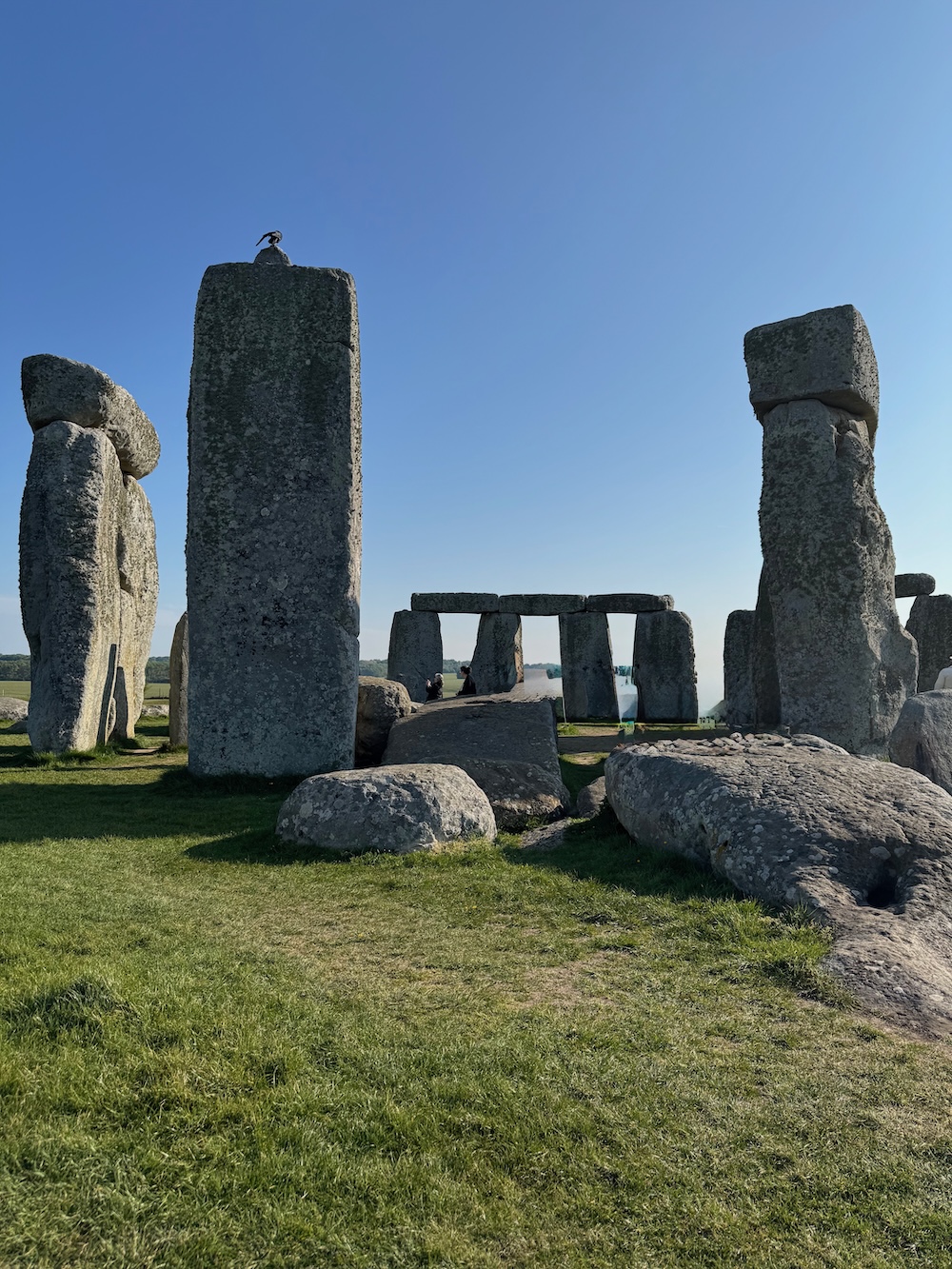
After months of planning, I was finally here, walking among the stones at Stonehenge.

It felt surreal standing beside stones that had remained in place for thousands of years. There is something difficult to explain about being there in person. The scale, the silence, the mystery…all of it creates a feeling that is both grounding and deeply reflective.

The Symbolism of The Moon

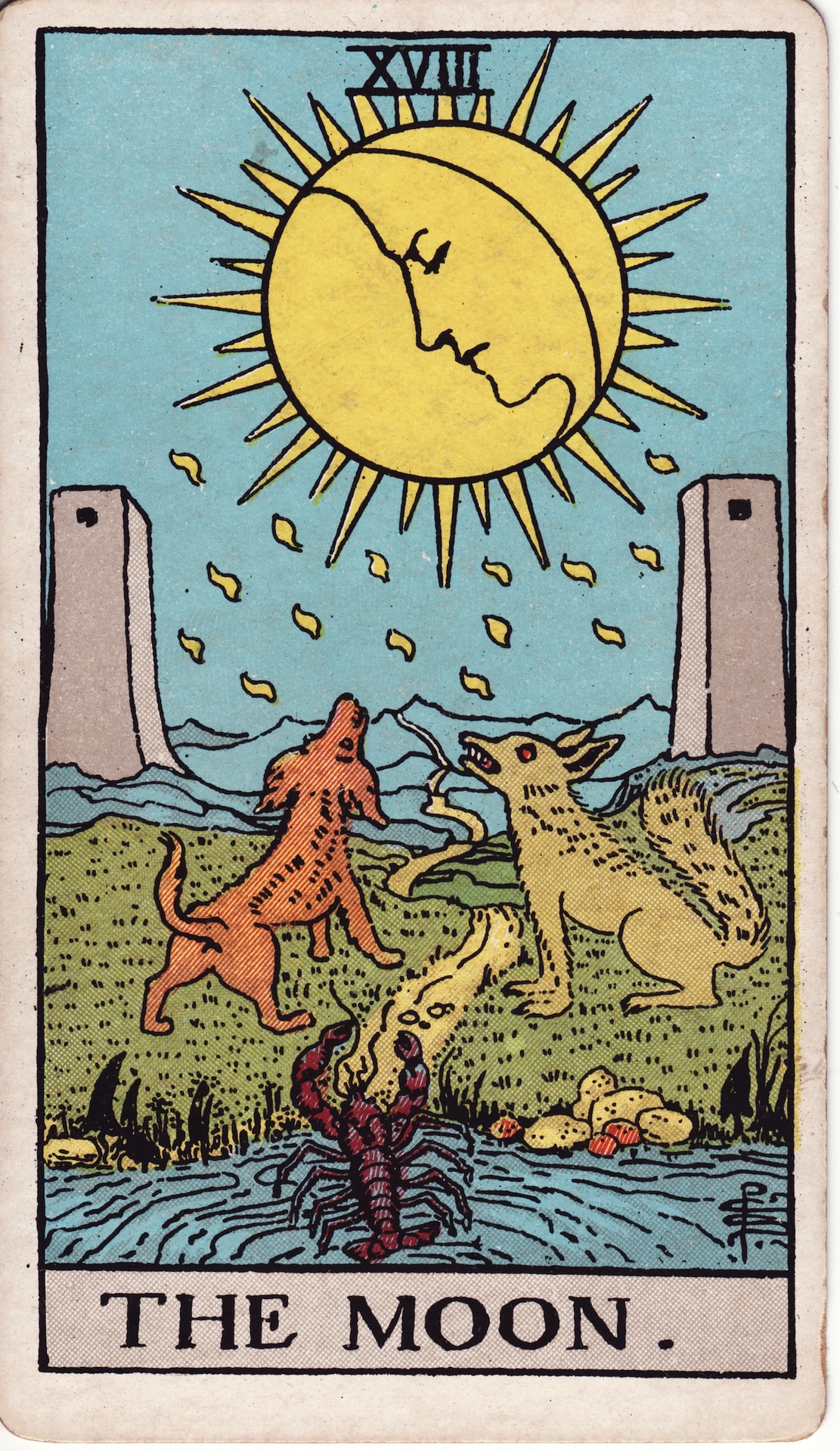
As part of my daily tarot practice, I often pull a card for reflection and insight. In the days leading up to the trip, I pulled The Moon on three separate occasions. I didn’t see it as a prediction, but I sensed there was something in the symbolism I had not fully understood yet.

Once I arrived at Stonehenge, the connection felt immediate. Built around celestial cycles and seasonal shifts, the monument carries the same emotional atmosphere as The Moon itself: uncertainty, transition, intuition, and moving forward without full clarity.

The Moon, a major arcana tarot card
IMG_5442

An Ancient Awareness of Cycles

All of the stones felt powerful in their own way, but I found myself especially drawn to one particular trilithon. According to the tour guide, it aligns with the Altar Stone during the winter solstice. The entire monument was carefully aligned with celestial events, marking both the summer and winter solstices. Many archaeologists now believe the winter solstice may have held even greater significance for the people who gathered there.

That connection stayed with me because the winter solstice reflects many of the same themes found within The Moon card:

  • Darkness before the return of light
  • Transition and renewal
  • Liminality and the unknown
  • Trusting cycles during uncertain times

Mystery Without Certainty

I sat quietly near the stone for a while, simply taking in the experience. As I often do, I laid my tarot cards out on the ground beside me. I pulled a few cards, but more than anything, I wanted to absorb the moment.

What struck me most was how much Stonehenge itself mirrors the emotional landscape of The Moon card. Archaeologists understand pieces of its purpose, but no single explanation fully defines it. Some believe it was ceremonial. Others see it as astronomical, agricultural, or connected to burial and ancestor rituals. What we do know is that it was intentional, deeply meaningful, and designed to connect people to something larger than themselves.

The Moon card asks for a similar kind of trust. It reminds us that we do not always have full clarity and that sometimes wisdom comes not from certainty, but from continuing forward anyway.

Ancient Ritual and Modern Reflection

Humans have always searched for meaning in uncertain times. Long before modern spiritual practices, people gathered in places like Stonehenge to observe cycles, honor transitions, and connect with the Divine. Thousands of years later, many of us are still doing the same thing in our own ways.

For me, tarot is not about having every answer. It is about reflection, symbolism, intuition, and learning to navigate uncertainty with greater awareness. Standing among the stones, I felt an overwhelming sense of gratitude. I felt connected not only to the past, but to something both deeply human and deeply spiritual. The stones may belong to the ancient past, but the search for meaning continues within us today.

Stonehenge: April 27, 2026

If you’d like to continue exploring the wisdom of tarot, sign up for my Inner Light Insights monthly newsletter. Each month, you’ll receive fresh reflections, tarot spreads, and inspiration to help guide your own journey — plus a little extra light to keep your scales in balance.

Filed Under: Blog, Living the Cards, Major Arcana: Follow the Light Tagged With: Featured

The Hermit and the Lighthouse: Finding Light in the Darkness

March 16, 2026 by Lisa

During a recent vacation in San Diego, I pulled The Hermit as my daily tarot card — two days in a row and three times in one week! At first, the message puzzled me. The Hermit traditionally speaks of solitude, contemplation, and withdrawal from the busy world. Yet here I was on vacation, exploring a vibrant coastal city, certainly not retreating into isolation.

Later that day, I found myself visiting the Old Point Loma Lighthouse at Cabrillo National Monument with a friend. Suddenly, The Hermit made perfect sense. Standing on the windswept cliffs overlooking the Pacific Ocean, the symbolism became unmistakable.

The lighthouse keeper was, in many ways, a living reflection of The Hermit - tending the light, keeping watch through the night, and quietly guiding others through darkness.

The Lantern and the Lighthouse Beam

The Hermit, a major arcana tarot card In the traditional Rider–Waite–Smith tarot deck, The Hermit holds a lantern containing a six-pointed star. The lantern does not illuminate the entire landscape. Instead, it lights only a small portion of the path ahead. When you think about it, a lighthouse works in much the same way. It does not light the entire ocean. Instead, it sends out a focused beam across the darkness, just enough to guide ships away from danger and toward safe passage.

What a beautiful metaphor for the wisdom we can offer others. Insight rarely arrives all at once with every answer neatly in place. More often, it appears as a small light that reveals the next step. Indeed, The Hermit does not promise certainty for the entire journey, only clarity for the moment directly in front of us.

The Keeper’s Vigil

While walking the lighthouse grounds, I noticed a sign whose message felt deeply connected to the meaning of The Hermit.

"Throughout much of history, the soul of lighthouses has been the keepers whose dedication and attention to detail kept the lights shining night after night."

For more than a century, lighthouse keepers carried out a quiet but vital task. They cleaned lenses, maintained the lamp, monitored weather conditions, and ensured the light never went out. Their work required *discipline, patience, and unwavering attention.

In many ways, the development of spiritual wisdom follows the same principle.

The Hermit’s wisdom develops slowly through observation, reflection, and inner work. Intuition and insight grow in much the same way. These gifts remain within us, but without attention and nurturing they can easily fade into the background. Like the lighthouse, these gifts must be tended with patience and thoughtful intention.

A Lighthouse is Built to Serve Others

As I walked further through the museum, another sign caught my attention. It quoted the playwright George Bernard Shaw:

"I can think of no other edifice constructed by man as altruistic as a lighthouse. They were built only to serve."

This observation captures the deeper spirit of The Hermit. A lighthouse does not demand recognition or reward. Its sole purpose is to guide strangers safely through dangerous waters. The Hermit carries a similar role in the tarot. At its highest expression, The Hermit becomes the teacher, guide, or mentor who illuminates the path for others. The wisdom gained through solitude eventually becomes something that can be shared. The Hermit withdraws not to escape humanity, but to better serve it.

For this reason, drawing The Hermit can be understood as a gift, an invitation to pause, reflect, and deepen our understanding of the path we are walking. In that quiet space, insight begins to take shape. And when the time is right, that inner light can become a source of guidance for others.

Taking a Deeper Look

As I continued walking the lighthouse grounds, I began to notice more parallels between The Hermit and the quiet work of a lighthouse keeper. One by one, deeper layers of symbolism began to reveal themselves.

Life on the Edge

Click to see full size image.

Lighthouses are built at the boundaries of the world. They stand on cliffs and rocky shores where the land meets the sea , places where navigation becomes uncertain and danger increases.

It is at this threshold that wisdom becomes necessary.

The Hermit appears in tarot readings during moments of transition, when the path forward is not yet fully visible. Like the lighthouse on a stormy coastline, The Hermit shines when clarity is most needed.

Waiting for Those Who Seek the Light

One of the most powerful lessons of the lighthouse is that it does not seek out the ships.

It simply shines.

The responsibility lies with the sailor to notice the light and adjust course accordingly. The Hermit offers guidance in the same way. Wisdom cannot be forced upon someone. It must be sought, recognized, and embraced by those who are ready for it.

Like the lighthouse, The Hermit waits quietly, lantern raised, for those who are seeking the light.

Climbing the Spiral

Like many lighthouses, the Point Loma lighthouse has a spiral staircase that leads upward to the lantern room. Spirals have long been recognized as symbols of transformation and growth, representing an inward journey toward deeper understanding.

Climbing a lighthouse tower is not unlike The Hermit’s path. Step by step, we move away from the noise of everyday life and toward a broader perspective. When we reach the top, the view expands dramatically. What once seemed chaotic or overwhelming suddenly becomes clearer from a higher vantage point. The Hermit’s wisdom often comes from this shift in perspective.

Becoming the Lighthouse

When we pull The Hermit card in tarot, we often assume the message is to withdraw from the world. Sometimes that is true. But the lighthouse offers another interpretation.

At times we search for light to guide our way. At other times we are called to tend our inner light that can illuminate the path for others.

The Hermit reminds us that wisdom gained through reflection can become a guiding light for others. We do not need to chase people or force answers upon them. We simply hold the lantern high and let the light shine.

And somewhere out in the darkness, someone searching for direction may see it.

*A Deeper Tarot Connection

Eight of Pentacles from tarot minor arcanaIn tarot symbolism, this dedication also echoes the Eight of Pentacles, a card associated with steady effort, mastery, and the quiet commitment required to refine one’s craft. Astrologically, the Eight of Pentacles corresponds to the first decan of Virgo, ruled by the Sun (hello lighthouse!). Virgo is also the zodiac sign traditionally associated with The Hermit.

The connection feels almost poetic. Just as the craftsman in the Eight of Pentacles carefully shapes each coin, the lighthouse keeper tended the lamp night after night, polishing lenses and maintaining the mechanisms that allowed the light to shine. Wisdom, like a lighthouse beam, does not sustain itself. It requires patient, devoted work.

If you’d like to continue exploring the wisdom of tarot, sign up for my Inner Light Insights monthly newsletter. Each month, you’ll receive fresh reflections, tarot spreads, and inspiration to help guide your own journey — plus a little extra light to keep your scales in balance.

Filed Under: Blog, Living the Cards, Major Arcana: Follow the Light Tagged With: Featured

  • « Previous Page
  • 1
  • 2
  • 3
  • 4
  • 5
  • …
  • 9
  • Next Page »

SEARCH FOR BLOG POSTS

CATEGORIES

  • All Posts
  • Tarot 101
  • Tarot and Numerology
  • Tarot & The Universe
  • Royal Reflections
  • Major Arcana: Follow the Light
  • Living the Cards
  • Light the Path: Tarot Spreads
  • Astrology and Tarot

RECENT POSTS

Judgement: The Awakening That Sets You Free

The Emperor Tarot Card Meaning: The Quiet Work of Leadership

5 Common Tarot Mistakes Every Beginner Makes (And How to Fix Them)

The Circle That Connects Us: Rediscovering the Three of Cups

Sagittarius and Temperance: The Wisdom of Integration

The Knight of Swords: In Pursuit of Truth

The Knight of Wands: Passion, Adventure, and the Open Road

INNER LIGHT TAROT, LLC
Copyright © 2026 · Inner Light Tarot, LLC - All Rights Reserved
Facebook Instagram
Site Powered by engageRE | © 2026 real.leads, inc. | Select images used with permission - © Can Stock Photo | WordPress Access | Agent Portal